

Skip to case study
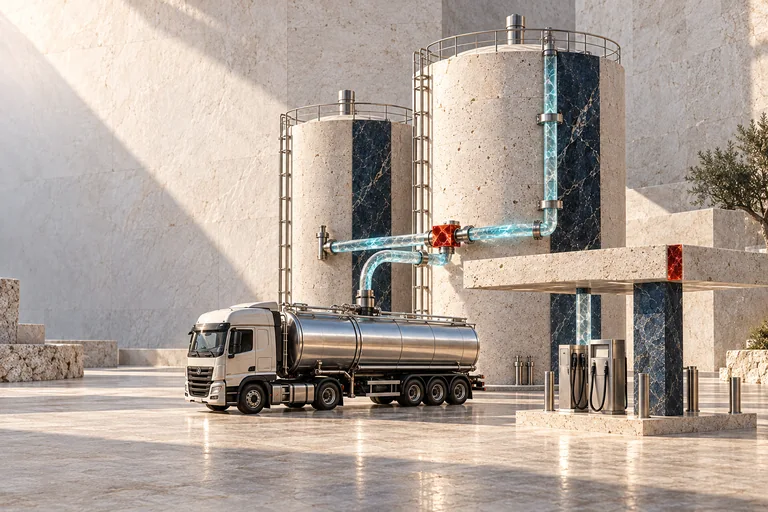
Conceptual industry artwork: fuel storage, tanker delivery and a connected dispatch workspace.
TrueFillFuel SaaS

From arranging fuel
to operating the platform.

Positioning, product-led growth, pricing and market education around TrueFill's transition from a fuel-delivery services business to a software platform.

Reported ARR growth
400%
Reported gallons managed
10M+
Engagement duration
3 years

The original account uses both percentage and multiplier descriptions of ARR that do not agree mathematically; this page preserves the explicitly reported 400% figure without converting it to a multiplier. Usage period, ARR baseline and transaction valuation are not published here.

01 / The assignment
  • Services-to-software positioning
  • Product-led acquisition and onboarding
  • Pricing and packaging
  • SaaS measurement and market education

The transition was not complete when software existed. Buyers also needed a reason to understand, adopt and pay for a platform.

TrueFill's original story begins with a fuel-delivery brokerage connecting customers and suppliers. The business saw an opportunity to turn its operational knowledge into fuel-management software. That changed the commercial problem: a transaction-led service and a recurring software relationship require different explanations, entry paths and measures. The engagement connected product-led acquisition with market education, and pricing. It also included SaaS metric instrumentation. The remit was to help the market understand a platform business and to help the business understand its own recurring economics, not simply rename a service as software.

02 / The work

Three transitions inside the larger transformation.

ExperienceLet a prospective customer reach useful software.

The original scope includes a free-trial motion, self-service onboarding and in-product upgrade paths. The commercial logic was to connect discovery with actual use of dispatching and tracking capabilities. Product-led growth still needed a clear path to value; removing a sales conversation would not, by itself, explain the product.

MarketExplain why the connected platform mattered.

Integrations with fuel suppliers and logistics platforms supported a marketplace-oriented story. Content, webinars, case studies and industry material helped explain fuel-management software to the market. The positioning work distinguished the connected operating capability from the brokerage transaction that buyers may already have understood.

EconomicsMatch packaging and measurement to recurring value.

Tiered plans, usage-based pricing and annual contracts were part of the pricing work described in the account. Instrumentation covered recurring revenue, acquisition cost, customer value, churn and net revenue retention. Those measures supported a different management conversation from simply counting individual fuel transactions.

Inside the operating idea

Service, software, platform: what changes?

Illustrative business-model cross-section drawn from the original engagement. It does not reproduce TrueFill's pricing or a customer contract.

TrueFillIllustrative reconstruction / not a live system
Service layerA transaction solves an immediate need

A broker connects demand with supply. Relationships and operational knowledge matter, but each transaction does not automatically establish recurring software usage or a subscription relationship.

Software layerThe customer adopts an ongoing workflow

Dispatching and tracking become capabilities a customer can use. Onboarding, product engagement and upgrade decisions therefore become part of the commercial experience rather than an afterthought to the sale.

Platform layerConnections expand the value of the system

Supplier and logistics integrations add context to the platform story. Their commercial significance depends on the use they enable, not simply the number of integrations listed on a website.

03 / What changed

Build the market understanding alongside the product.

The original account reports growth in annual recurring revenue, platform usage measured in gallons and acquisition by Titan Cloud. These describe different dimensions of the business. Gallons are an operating-volume measure, not a revenue figure; an acquisition is a corporate outcome, not a channel-attribution metric.

The decision that mattered

A services-to-software transition asks buyers to change how they think about the relationship. The engagement paired adoption paths and packaging with education, so the product and its commercial explanation could develop together. Neither a new price page nor a category slogan could do that alone.

The enduring commercial idea is the connection between a new product experience and a new buying model. The work helped frame a recurring platform relationship through positioning, education, pricing and measurement. The account is presented without inferring a transaction valuation or claiming the engagement alone caused the acquisition.

Source and measurement context

The original account uses both percentage and multiplier descriptions of ARR that do not agree mathematically; this page preserves the explicitly reported 400% figure without converting it to a multiplier. Usage period, ARR baseline and transaction valuation are not published here.

Scope and figures are drawn from RevOasis's original TrueFill engagement account. The diagrams explain the work; they are not original client documents or evidence of current system performance. The artwork is a conceptual industry illustration, not a photograph of the client's products or facilities. Reported outcomes are not a forecast for another business.

Client perspectiveWade Lowe

“RevOasis was instrumental in our transformation from services to SaaS. They didn't just help us build the product-they helped us position it, price it, and take it to market. The exit to Titan Cloud validated everything we built together.”

Wade LoweFormer Founder & CEO, TrueFill
Your next chapter

What does your business
need to make possible?

Talk through the work
Another engagementSite Fuel